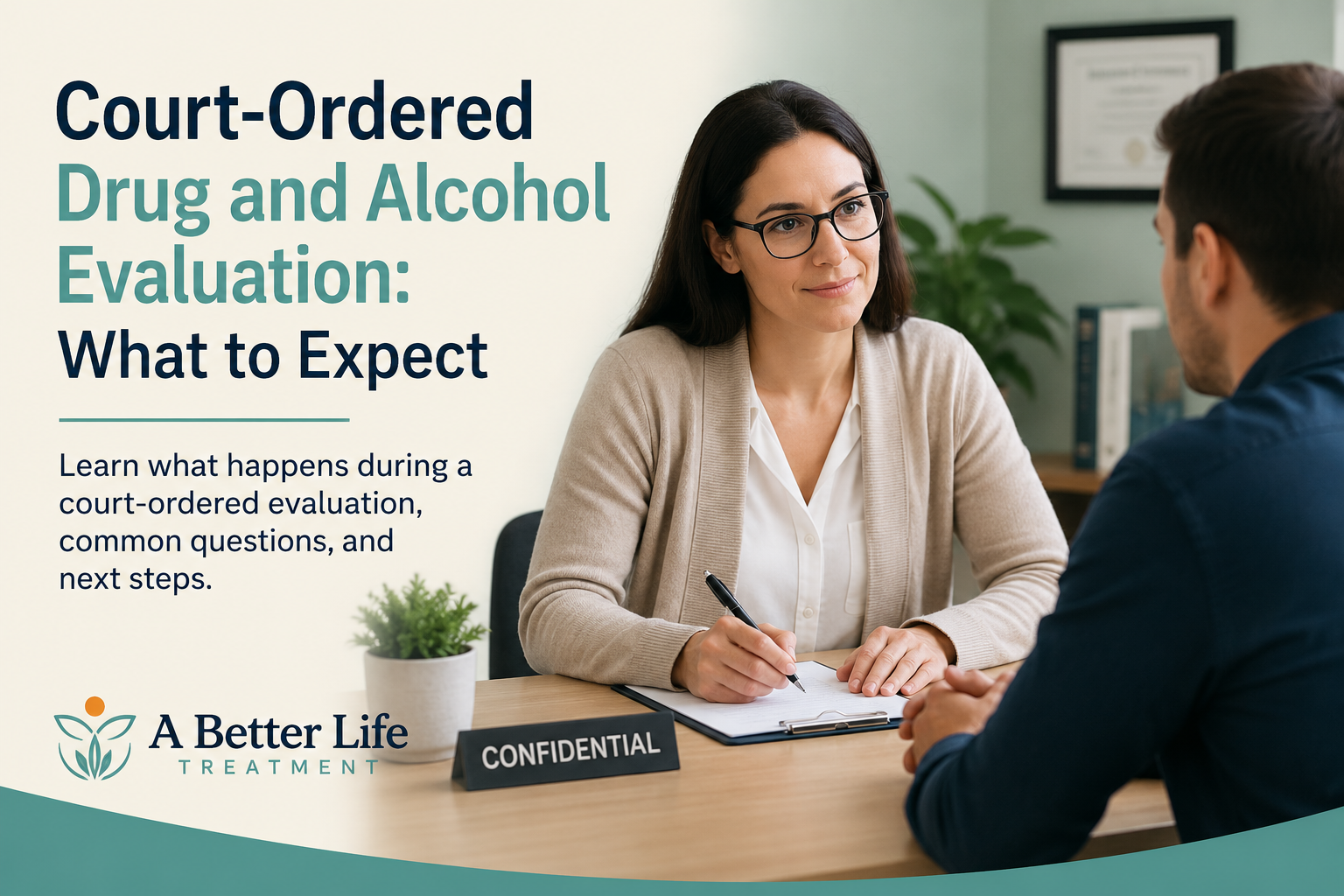
Court-Ordered Drug and Alcohol Evaluation: What to Expect
If a judge, attorney, probation officer, employer, or licensing board has told you to complete a drug and alcohol evaluation, you may feel unsure about what comes next. The good news is that the process is usually straightforward, confidential, and designed to help determine what level of support, education, or treatment may be appropriate.
At A Better Life Treatment, we help individuals complete professional evaluations for legal, court, probation, family, workplace, and personal situations. Our goal is to make the process clear, respectful, and as stress-free as possible.
What Is a Court-Ordered Drug and Alcohol Evaluation?
A court-ordered drug and alcohol evaluation, sometimes called a substance abuse evaluation or drug and alcohol assessment, is a professional screening used to better understand a person’s history with alcohol, drugs, mental health concerns, and related behaviors.
The evaluation does not automatically mean you have an addiction. It is a structured process used to determine whether there may be substance use concerns and whether recommendations such as education, counseling, outpatient treatment, or additional support are appropriate.
Why Would a Court Order a Drug and Alcohol Evaluation?
Courts and legal professionals may request an evaluation when alcohol or drug use may be related to a case, legal charge, probation requirement, custody matter, workplace concern, or licensing issue.
Common reasons include:
- DUI, DWI, OUI, OVI, or impaired driving charges
- Drug possession or alcohol-related offenses
- Probation or pretrial requirements
- Child custody or family court concerns
- Employer or workplace-related substance use concerns
- Professional licensing board requirements
- Attorney-recommended evaluations before a hearing
- Personal concerns about alcohol or drug use
What Happens During the Evaluation?
During the evaluation, a qualified professional will ask questions about your background, current situation, substance use history, legal concerns, mental health history, and any previous treatment or counseling.
The evaluation may include:
- A confidential interview
- Review of court, probation, or attorney paperwork if available
- Questions about alcohol or drug use patterns
- Questions about mental health, stress, work, and family history
- Screening tools or assessment forms
- A written recommendation or report, when required
The purpose is not to embarrass or judge you. The goal is to gather enough information to make a fair, professional recommendation based on your circumstances.
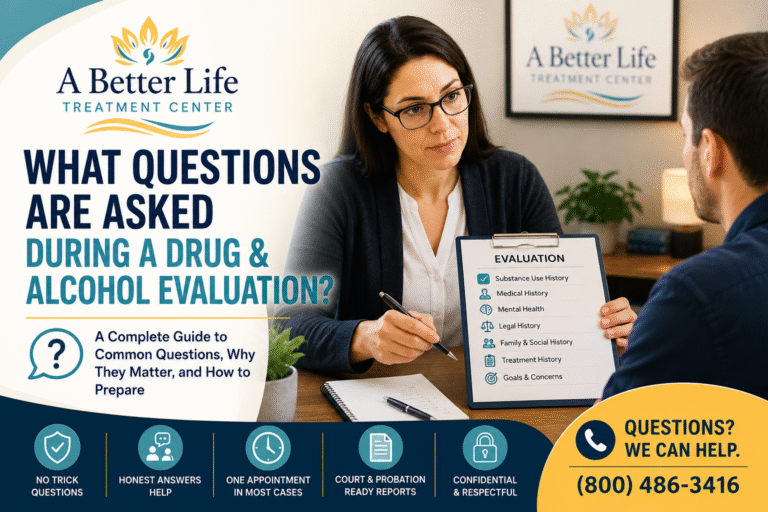
What Questions Are Asked in a Drug and Alcohol Evaluation?
Many people feel nervous because they do not know what they will be asked. While every situation is different, common questions may include:
- What led to the evaluation requirement?
- How often do you drink alcohol or use substances?
- Have you ever tried to cut back or stop?
- Has alcohol or drug use affected work, school, family, or legal responsibilities?
- Have you ever received treatment, counseling, or attended support groups?
- Are you currently taking any medications?
- Do you have a history of anxiety, depression, trauma, or other mental health concerns?
Answering honestly is important. The evaluator’s role is to understand the full picture and make an appropriate recommendation, not to assume the worst.
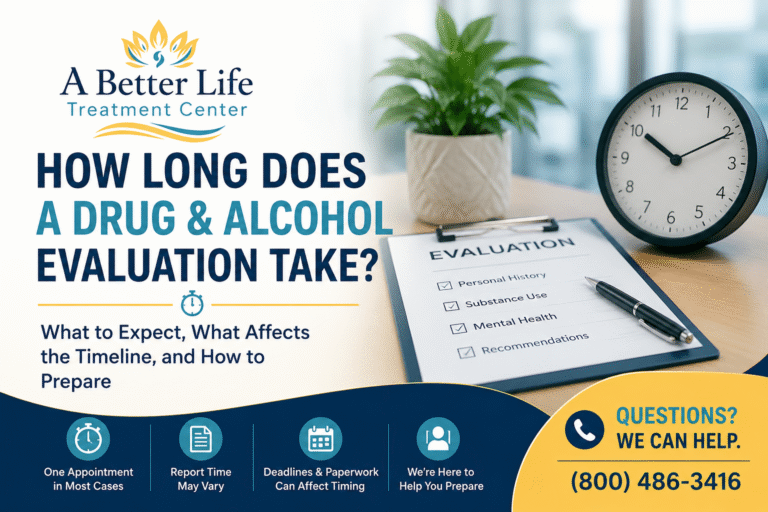
How Long Does a Drug and Alcohol Evaluation Take?
Most evaluations can be completed in one appointment, depending on the complexity of the case and whether additional documents are needed. Some people may need a written report sent to an attorney, court, probation officer, employer, or licensing board.
If you have a deadline, it is best to schedule as soon as possible so there is time to complete the appointment, prepare any required documentation, and send the results where they need to go.
Can You Complete a Drug and Alcohol Evaluation Online?
In many situations, evaluations may be available virtually or online, depending on the requirement, jurisdiction, and documentation needed. Online evaluations can be helpful for people who need flexible scheduling, live out of state, have transportation challenges, or need to complete the process quickly.
Before scheduling, it is important to confirm whether your court, probation office, attorney, employer, or licensing board will accept a virtual evaluation.
A Better Life Treatment can help you understand what information may be needed before your appointment.
What Happens After the Evaluation?
After the evaluation, the provider may recommend one or more next steps based on your situation. Recommendations can vary widely and may include:
- No further treatment recommended
- Alcohol or drug education classes
- Outpatient counseling
- Intensive outpatient treatment
- Relapse prevention support
- Mental health counseling or additional assessment
- Follow-up documentation for court or probation
A recommendation does not mean the evaluator is trying to make the process harder. It is meant to identify what level of help, if any, may reduce future risk and support long-term stability.
Do You Need a Drug and Alcohol Evaluation Fast?
If you have an upcoming court date, probation deadline, attorney request, custody hearing, or employer requirement, scheduling quickly can help you avoid delays. Our team works to make the process simple and confidential.
- Professional drug and alcohol evaluations
- DUI and court-related evaluation support
- Substance abuse assessments
- Mental health evaluation referrals when appropriate
- Clear next steps after your appointment
- Documentation support when required
FAQ: Court-Ordered Drug and Alcohol Evaluations
Is a drug and alcohol evaluation the same as a substance abuse evaluation?
In many cases, yes. The terms drug and alcohol evaluation, substance abuse evaluation, alcohol assessment, and substance use assessment are often used to describe a similar process. The exact wording may depend on the court, probation office, attorney, or agency requesting it.
Can I fail a drug and alcohol evaluation?
An evaluation is not usually a pass-or-fail test. It is a professional assessment used to determine whether education, counseling, treatment, or no further services may be recommended.
Will the court receive my evaluation?
If the court, attorney, probation officer, employer, or licensing board requires documentation, a report may need to be sent after the evaluation. You should ask what documentation is required before your appointment.
What should I bring to my evaluation?
Bring any court paperwork, probation instructions, attorney letters, case information, prior treatment records, medication information, and contact details for where the report should be sent, if applicable.
Can I complete my evaluation before my court date?
Yes, many people complete an evaluation before court if recommended by an attorney or required as part of the legal process. Completing it early may help prevent delays.
Does an evaluation always lead to treatment?
No. Treatment is not automatically recommended for everyone. Recommendations are based on the information gathered during the evaluation and the requirements of the situation.
Schedule a Confidential Evaluation Today
If you need a court-ordered drug and alcohol evaluation, DUI evaluation, substance abuse assessment, or alcohol evaluation, A Better Life Treatment can help you take the next step with clarity and respect.
Call today to speak with our team and find out what information is needed to schedule your evaluation.