Recovery does not always require stepping away from work, school, family, or everyday responsibilities. An Intensive Outpatient Program (IOP) provides structured treatment while allowing individuals to continue living at home or in a sober living environment.
An Intensive Outpatient Program is designed for individuals dealing with substance use challenges who need more structure and support than traditional outpatient care but do not require medical detoxification or 24-hour supervision.
What Is an Intensive Outpatient Program?
An Intensive Outpatient Program is a structured treatment program that focuses on substance use concerns, relapse prevention, and the development of healthier coping skills.
Unlike inpatient treatment, participants do not stay at the treatment facility around the clock. Instead, they attend scheduled treatment sessions and return home or to a sober living environment afterward.
This approach allows participants to receive consistent therapeutic support while continuing important responsibilities such as employment, education, and family commitments.
How Does an IOP Support Recovery?
An IOP combines several forms of treatment to address the different challenges that can affect recovery. At A Better Life Treatment, the program includes individual counseling, group counseling, behavioral therapies, psycho education, case management, and family support.
The goal is not simply to attend sessions. Participants also have opportunities to develop practical skills that can be applied outside of treatment.
Individual Counseling
One-on-one counseling provides an opportunity to work directly with a counselor on personal concerns related to substance use and recovery.
These sessions can help participants work through individual challenges and address issues that may be difficult to discuss in a group setting.
Group Counseling
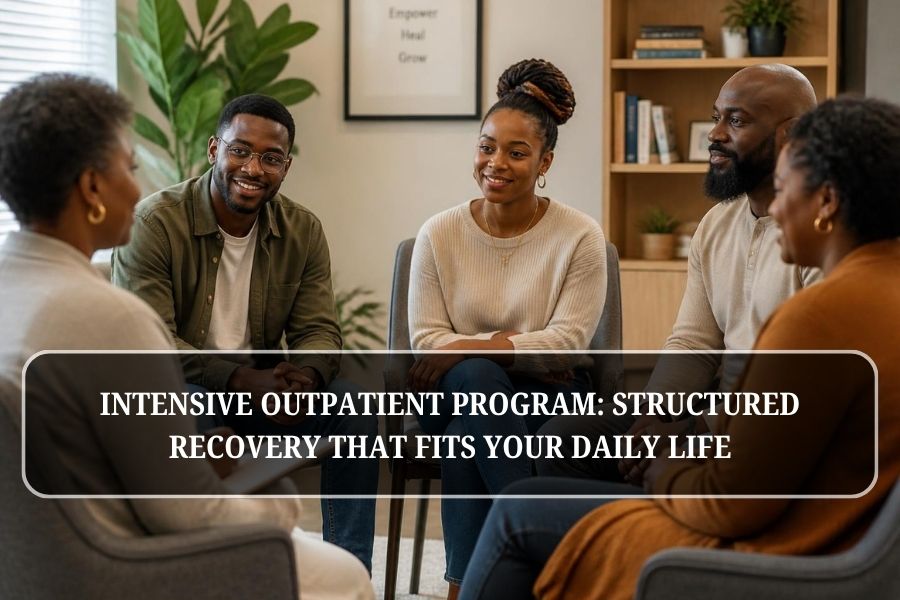
Group sessions provide a structured environment where participants can work on skills, education, support, and interpersonal concerns.
A Better Life Treatment’s IOP includes skills-development groups, psycho-educational groups, support and interpersonal process groups, as well as individual therapy sessions.
Cognitive-Behavioral Therapy
Cognitive-Behavioral Therapy (CBT) is another component of the program.
Through CBT, participants learn to recognize thought patterns and behaviors that may contribute to substance use. The approach also focuses on identifying triggers, developing coping strategies, strengthening confidence, and practicing new skills in everyday situations.
What Is the Weekly Commitment?
A Better Life Treatment’s IOP provides 9 or more hours of structured therapeutic programming each week.
The program is designed to provide significant treatment support without requiring participants to leave their regular living environment or completely step away from their daily responsibilities.
Flexible IOP Scheduling
Maintaining work, school, or family responsibilities can make scheduling an important consideration when choosing treatment. A Better Life Treatment offers several scheduling options.
Day Program
The day program runs from 9:00 AM to 12:00 PM on Monday, Wednesday, and Friday.
This schedule may work well for people who have evening employment or family responsibilities.
Evening Program
The evening program runs from 6:00 PM to 9:00 PM on Monday, Wednesday, and Friday.
This option is designed for people who have daytime work or school commitments.
Weekend Program
The weekend option runs from 10:00 AM to 1:00 PM on Saturday, along with two weekday evenings.
This schedule may be useful for individuals whose weekday schedules are less flexible.

How Long Does an IOP Last?
The typical program length at A Better Life Treatment is approximately 90 days. However, treatment may last between 6 and 12 weeks and can be extended depending on individual progress and clinical needs.
The program uses ASAM criteria to help determine an appropriate duration of care for each individual.
Who May Be a Good Fit for IOP?
An IOP may be appropriate for individuals who can safely participate in outpatient treatment while maintaining a stable living environment.
A Better Life Treatment identifies several factors that may indicate IOP is appropriate, including:
- Having reliable transportation to treatment sessions
- Having a supportive and stable living environment
- Having completed detoxification or inpatient treatment and needing continued support
- Having minimal risk of acute intoxication or withdrawal
- Having medical conditions that can be managed without 24-hour supervision
- Having mild to moderate psychological symptoms that can be managed through outpatient care
A professional assessment is important because the appropriate level of care depends on an individual’s circumstances.
When May Another Level of Care Be More Appropriate?
IOP is not intended to provide 24-hour medical or residential supervision.
A different level of care may need to be considered when someone is experiencing severe withdrawal symptoms, has complex medical needs requiring continuous care, has severe psychiatric symptoms requiring stabilization, or does not have a stable and supportive living environment.
A history of multiple unsuccessful attempts at lower levels of care may also indicate the need to consider another treatment option.
IOP vs. Inpatient Treatment
The primary difference is the treatment environment.
With an IOP, individuals continue living at home or in a sober living environment while attending scheduled treatment sessions. They can continue working, attending school, and maintaining family responsibilities.
Inpatient treatment involves living at the treatment facility and receiving 24-hour care and supervision.
A Better Life Treatment’s IOP generally requires 9 or more hours of treatment each week, while inpatient care involves full-time, 24-hour treatment. The right choice depends on the individual’s needs and circumstances.
Continuing Life While Working on Recovery
One of the main features of an IOP is the ability to practice recovery skills in everyday life.
Instead of remaining in a treatment setting throughout the day, participants can return to their normal environment after treatment. This creates opportunities to apply coping strategies and other skills to real-world situations while continuing to receive structured support.
The program is designed to work alongside daily responsibilities rather than requiring individuals to completely put their lives on hold.
Family Support and Connection
Recovery can affect more than the individual receiving treatment. Family relationships and support systems can also play an important role in the recovery process.
A Better Life Treatment incorporates family support into its treatment approach and emphasizes maintaining connections with loved ones throughout recovery.
Making Treatment More Accessible
Cost can be a concern when considering treatment. A Better Life Treatment offers several financial assistance options.
The organization provides an income-based sliding scale for qualifying individuals and also offers flexible payment options. Assistance may also be available for people who do not currently have insurance.
Most insurance plans are accepted, and individuals can verify their benefits before beginning treatment.
Finding the Right Level of Care
Choosing between outpatient, intensive outpatient, and inpatient treatment should be based on individual needs rather than simply selecting the most intensive option.
A Better Life Treatment addiction specialists consider factors such as medical history, substance use patterns, support systems, and personal goals when helping determine an appropriate level of care.
Take the Next Step Toward Recovery
An Intensive Outpatient Program can provide structured treatment and ongoing support while allowing individuals to remain connected to their homes, families, work, or education.
If you believe an IOP may fit your situation, a professional assessment can help determine whether this level of care is appropriate and what type of treatment plan may best support your recovery.