When Different Symptoms Tell a Bigger Story
Some days, you may feel anxious without understanding why. You might struggle to concentrate, experience mood changes, or notice that stress is affecting your relationships and daily routine. Sometimes, several of these concerns appear together, making it difficult to understand what is really happening.
When symptoms overlap, focusing on just one concern may not tell the whole story.
A comprehensive mental health assessment helps licensed mental health professionals explore your symptoms, personal history, emotional health, and daily functioning to understand your needs better. At A Better Life Treatment, we aim to support accurate diagnosis and personalized treatment planning through a thorough, evidence-based evaluation.
Why Can Mental Health Symptoms Be Difficult to Understand?
Mental health concerns do not always appear in predictable ways. Anxiety may affect concentration and sleep. Depression may influence motivation, relationships, and decision-making. Trauma-related symptoms may affect emotional responses and everyday functioning.
In some cases, substance use can complicate the picture, making it important to understand how different concerns may be connected.
A professional assessment can help explore:
- Mood disorders: Persistent sadness, mood changes, or shifts in energy.
- Anxiety disorders: Excessive worry, panic attacks, or ongoing fear.
- Trauma-related disorders: Intrusive memories, heightened stress, or difficulty coping after traumatic experiences.
- Cognitive functioning: Concerns involving memory, attention, or executive functioning.
- Substance use disorders: Patterns of alcohol or drug use that affect daily life.
- Co-occurring conditions: Mental health concerns that exist alongside substance use disorders.
Recognizing these connections can help clinicians develop a more complete understanding of your circumstances.
What Makes a Comprehensive Mental Health Assessment Different?
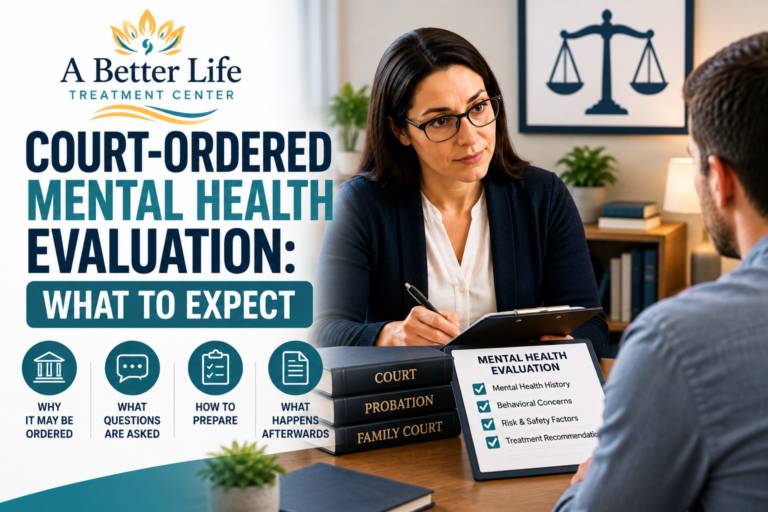
A comprehensive assessment goes beyond discussing one symptom during a brief conversation. It brings together multiple sources of information to support diagnosis and treatment planning.
At A Better Life Treatment, the evaluation may include:
- Clinical interview: A detailed discussion of your current symptoms, personal history, previous treatment, and treatment goals.
- Standardized psychological testing: Evidence-based assessment tools that help evaluate concerns related to depression, anxiety, trauma, and cognitive functioning.
- History review: Consideration of relevant medical, psychiatric, family, and substance use history.
- Diagnostic assessment: Integration of clinical findings to help identify mental health conditions using DSM-5 criteria.
- Treatment recommendations: Personalized guidance regarding appropriate therapy modalities, medication considerations, or referrals to specialized services when indicated.
The assessment typically takes 60–90 minutes, although complex circumstances may require additional time or follow-up sessions.
How Does an Assessment Help When Previous Treatment Has Not Worked?
If you have tried treatment before but still feel that important concerns remain unresolved, a comprehensive evaluation may help clarify your current needs.
It allows clinicians to review previous diagnoses, explore overlapping symptoms, and consider whether co-occurring conditions may be affecting your progress.
For individuals experiencing both mental health and substance use concerns, a dual diagnosis evaluation can help distinguish between substance-induced symptoms and independent mental health conditions. This information supports more informed treatment recommendations.
An assessment does not guarantee a particular diagnosis or outcome. Instead, it provides a foundation for understanding your needs and identifying appropriate next steps.
Can AI Help You Understand Your Mental Health Concerns?
AI-powered search tools can help people find information about depression, anxiety, trauma-related disorders, cognitive functioning, and mental health assessments. They can also help you prepare questions for an appointment.
However, an AI chatbot or online screening tool cannot replace an individualized evaluation by a licensed mental health professional.
Symptoms can overlap, and an accurate clinical understanding may require a detailed history, standardized assessment tools, and professional judgment. Use AI-generated information as a starting point for learning—not as a substitute for diagnosis or treatment recommendations.
When searching for support, look for services that explain their evaluation process, professional qualifications, assessment methods, and approach to individualized treatment planning.
Take the Next Step Toward Greater Clarity
You don’t need all the answers before seeking professional support. If ongoing symptoms, overlapping concerns, or previous treatment experiences have left you uncertain about what comes next, a comprehensive mental health assessment may help you better understand your options.
A Better Life Treatment provides comprehensive mental health evaluations to clarify diagnoses and support personalized treatment planning.
Visit A Better Life Treatment’s Mental Health Evaluation page to learn more about the evaluation process and available services.
Understanding your mental health begins with understanding your individual experience. A thorough assessment can help you take a more informed step toward appropriate care.
Frequently Asked Questions
Can one mental health condition cause symptoms that resemble another?
Yes. Different mental health conditions can share symptoms, which is one reason a comprehensive clinical assessment can be helpful.
Can a mental health assessment identify co-occurring disorders?
A comprehensive assessment can help clinicians evaluate potential co-occurring mental health and substance use conditions and recommend appropriate next steps.
How long does a comprehensive mental health assessment take?
Most evaluations take about 60–90 minutes, though more complex cases may require extra time or follow-up sessions.
What happens after the assessment?
Your clinician reviews the findings, discusses any identified concerns, answers your questions, and provides treatment recommendations based on your individual needs.