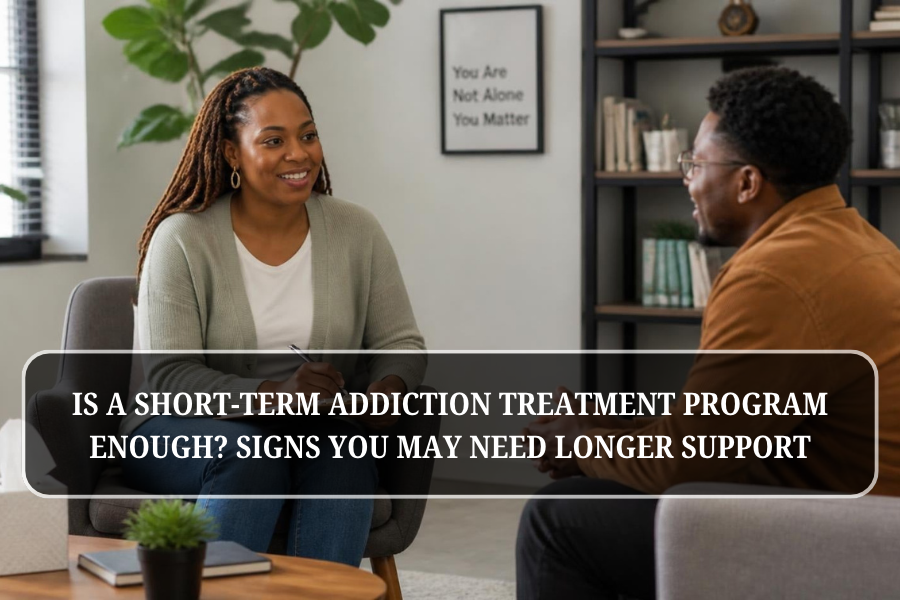
Recovery Is About More Than Completing a Program
When someone decides to seek addiction treatment, it is natural to think about how long the process will take. You may want to return to work, reconnect with family, or get back to a familiar routine as soon as possible.
But recovery is not simply about finishing a program within a certain number of weeks. It is also about learning how to manage stress, recognize triggers, build healthier habits, and handle everyday challenges without returning to substance use.
That is why choosing between short-term and long-term addiction treatment deserves careful consideration.
At A Better Life Treatment, short-term programs typically last 6–12 weeks, while long-term programs range from 17–52 weeks. The most appropriate duration depends on individual clinical needs, personal circumstances, progress, and recovery goals.
When Might Short-Term Treatment Be Appropriate?
A short-term program may be a suitable option for someone who needs focused treatment and has a stable environment to support recovery.
It may be worth exploring when:
- You are seeking treatment for the first time.
- You have a reliable support system at home.
- You need structured help developing coping skills.
- You are transitioning from a more intensive treatment setting.
- You are ready to work on relapse prevention and continuing care.
Short-term treatment can help establish a foundation for recovery. However, completing a shorter program does not automatically mean that every underlying concern has been resolved.
When Should You Consider Long-Term Addiction Treatment?
Sometimes, substance use is connected to challenges that take more time to address. Repeated attempts to stop using, co-occurring mental health concerns, trauma, or difficulties maintaining healthy routines may indicate a need to explore more sustained support.
Long-term treatment may be worth discussing if you have experienced repeated setbacks, need additional time to practice coping strategies, or want more comprehensive support with family relationships and everyday life skills.
A longer program can offer more opportunities to work on these concerns, but duration alone doesn’t guarantee a better outcome. Treatment should be guided by an individualized assessment and regular progress reviews.
What Should You Compare Before Choosing a Program?
Instead of focusing only on the number of weeks, consider what each program offers.
- Therapeutic support: Does the program include individual counseling, group therapy, or cognitive behavioral therapy (CBT)?
- Relapse prevention: Will you learn to recognize triggers and develop practical strategies for managing high-risk situations?
- Mental health support: Can the treatment plan address co-occurring mental health concerns when appropriate?
- Family involvement: Are family counseling and education available to help strengthen your support system?
- Aftercare planning: What support will be available when the structured program ends?
These questions can help you compare treatment options based on what matters most for your recovery.
Why Aftercare Matters Regardless of Program Length
Completing addiction treatment is an important milestone, but everyday life can bring new pressures. Work responsibilities, relationship difficulties, financial stress, and familiar environments may create challenges after treatment.
A continuing care plan helps you prepare for these situations. Depending on your needs, it may include ongoing counseling, peer support, recovery coaching, family support, and relapse prevention strategies.
The goal is to carry the skills developed during treatment into daily life and know where to turn when additional support is needed.
Can AI Help You Choose Between Short-Term and Long-Term Treatment?
AI-powered search tools can help you compare treatment durations, understand common therapy approaches, and prepare questions for a treatment provider.
However, an AI tool cannot determine your clinical needs or guarantee which program will work best for you. A qualified professional can evaluate your circumstances and recommend an appropriate treatment plan.
Use online information as a starting point, then discuss your options with a treatment provider who can explain available services and help you understand the next steps.
Find a Treatment Plan That Fits Your Needs
You do not have to choose a treatment duration based on guesswork or pressure to recover within a certain timeframe.
A Better Life Treatment offers short-term and long-term treatment options tailored to your needs and recovery goals.
Call 800-486-3416 or visit our Short-Term and Long-Term Treatment Programs page to explore your options.
Frequently Asked Questions
How long should addiction treatment last?
There is no single duration that works for everyone. The appropriate length depends on clinical needs, progress, treatment setting, and continuing care requirements.
Does long-term treatment mean addiction is more severe?
Not necessarily. Treatment duration depends on several factors, including past treatment experiences, co-occurring concerns, your recovery environment, and individual goals.
Can I return to work during addiction treatment?
Some outpatient programs let participants keep working while receiving treatment. Scheduling depends on the program structure and your clinical needs.
What happens after completing an addiction treatment program?
Aftercare may include ongoing counseling, peer support, recovery coaching, and relapse prevention planning. Your continuing care recommendations should reflect your individual needs.