Completing an addiction treatment program is an important milestone. But what happens when treatment sessions become less frequent, daily responsibilities return, and you have to put your recovery skills into practice outside a structured setting?
For many people, this transition brings new challenges. Work stress, family responsibilities, social situations, and unexpected setbacks can make it difficult to maintain the progress made during treatment. You may understand what supports your recovery but still need help applying those lessons in everyday life.
That is where peer support and recovery coaching can make a difference. These services encourage, practical guidance, and accountability as you keep building a life that supports your recovery.
Why the Transition After Treatment Can Feel Difficult
Treatment can help you understand substance use, recognize triggers, develop coping skills, and establish recovery goals. However, everyday life does not always follow a predictable plan.
You might find yourself dealing with:
- Stressful situations at work or home
- Changes in relationships and social circles
- Difficulty establishing a consistent daily routine
- Feelings of isolation or uncertainty
- Challenges managing cravings or recognizing early warning signs
- Trouble staying motivated when progress feels slow
Experiencing these challenges does not automatically mean recovery is failing. It may mean you need extra support as you adjust to new habits and responsibilities.
Ongoing care can help you stay connected to your goals and spot concerns before they become harder to manage.
What Is Recovery Coaching?
Recovery coaching offers practical, goal-oriented support for people working toward sustained recovery. Rather than focusing exclusively on the past, a recovery coach can help you identify what you want to work toward next and develop realistic steps to get there.
Depending on your needs and goals, coaching may help you:
- Set manageable personal recovery goals
- Build healthier routines and time-management skills
- Identify triggers and develop strategies for challenging situations
- Strengthen communication and relationship skills
- Work toward employment, career, or financial goals
- Recognize progress and adjust your plan when obstacles arise
For example, someone who finds evenings particularly difficult might work with a recovery coach to create a structured after-work routine, identify supportive people to contact, and plan healthy activities.
The purpose is not to make every decision for you. It is to help you build confidence and practical skills so you can make decisions that support your own recovery.
How Peer Support Offers a Different Kind of Connection
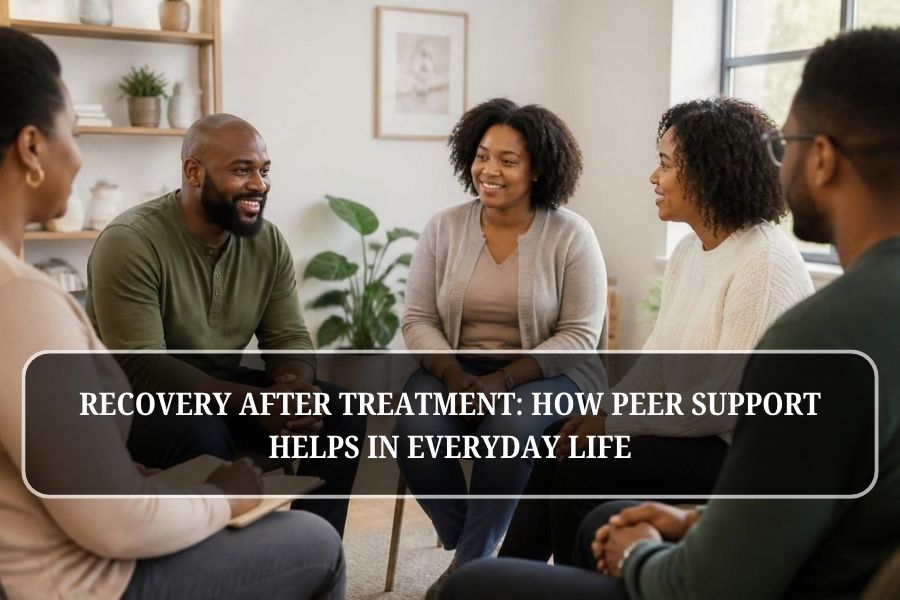
Peer support combines professional training with the understanding that comes from lived recovery experience. Peer support specialists can offer encouragement, listen without judgment, and help individuals feel less alone as they navigate recovery.
This connection can be valuable when friends or family members don’t fully understand what you are experiencing.
Peer support may include one-on-one conversations, facilitated group sessions, help connecting with community resources, and encouragement during difficult periods.
A peer support specialist does not need to have experienced your exact circumstances to offer meaningful support. The goal is to create a respectful relationship built on mutual understanding, hope, personal strengths, and your right to make decisions about your recovery.
Recovery Coaching vs. Peer Support: What Is the Difference?
Although the services can overlap, they often emphasize different aspects of recovery.
Recovery coaching generally focuses on personal goals, action plans, practical life skills, progress tracking, and strategies for addressing obstacles.
Peer support emphasizes connection, shared understanding, encouragement, and learning alongside someone familiar with the recovery journey.
Some people may benefit from one service, while others may find both useful. Peer support and coaching are not substitutes for clinical treatment when therapy, medical care, or a higher level of treatment is needed. They can complement an appropriate treatment plan.
Building a Recovery Routine That Works in Real Life
Long-term recovery involves more than avoiding substance use. It also means developing a daily life that supports your well-being, relationships, and personal goals.
Start with small, realistic steps. Establish consistent sleep and meal times, plan activities that structure your day, and make time for supportive relationships. Consider which situations increase stress, and decide in advance how you will respond.
It can also help to identify people you can contact when you need encouragement. A trusted support network gives you options when motivation is low or an unexpected challenge appears.
Recovery coaching can help turn broad intentions into specific, achievable actions. Peer support can provide connection and reassurance as you work toward those goals.
If you experience a return to substance use or feel that your current support is no longer enough, reach out promptly to an appropriate treatment professional. A setback doesn’t erase your progress, and you don’t have to work through it alone.
Is Peer Support Right for You?
Recovery coaching and peer support may be worth exploring if you want additional accountability, practical help with daily challenges, or connection with people who understand recovery.
They may also be useful if you are transitioning from a formal treatment program, rebuilding your social network, or trying to maintain healthy routines over time.
Your needs can change as your recovery develops. The right support should respect your goals, encourage independence, and fit alongside any clinical care you need.
Frequently Asked Questions
What is peer support in addiction recovery?
Peer support connects people working toward recovery with trained individuals who draw on professional preparation and, where applicable, personal recovery experience. It can provide encouragement, practical guidance, and a sense of connection.
What does a recovery coach help with?
A recovery coach may help you set goals, create action plans, develop life skills, recognize triggers, strengthen accountability, and identify resources that support recovery.
Can peer support replace addiction treatment?
No. Peer support and recovery coaching can complement clinical treatment, but they do not replace medical care, therapy, detoxification, or other services when those are needed.
When should I consider recovery coaching?
You might consider recovery coaching when you want help putting recovery goals into practice, maintaining routines, managing everyday obstacles, or building confidence as you move forward.
Can I receive peer support while attending treatment?
Peer support may complement clinical services, depending on your treatment plan and available programs. Discuss your needs with your treatment provider to determine what combination of services is appropriate.
Take the Next Step Toward Ongoing Recovery Support
Recovery continues beyond the treatment setting. With practical guidance, meaningful connection, and realistic goals, you can keep developing the skills and support network that help you move forward.
A Better Life Treatment offers recovery coaching and peer support services designed to complement clinical care and help individuals navigate everyday recovery challenges.
Contact the team to learn more about available services and discuss your support needs.
Call: 800-486-3416
Email: help@abetterlifetreatment.org