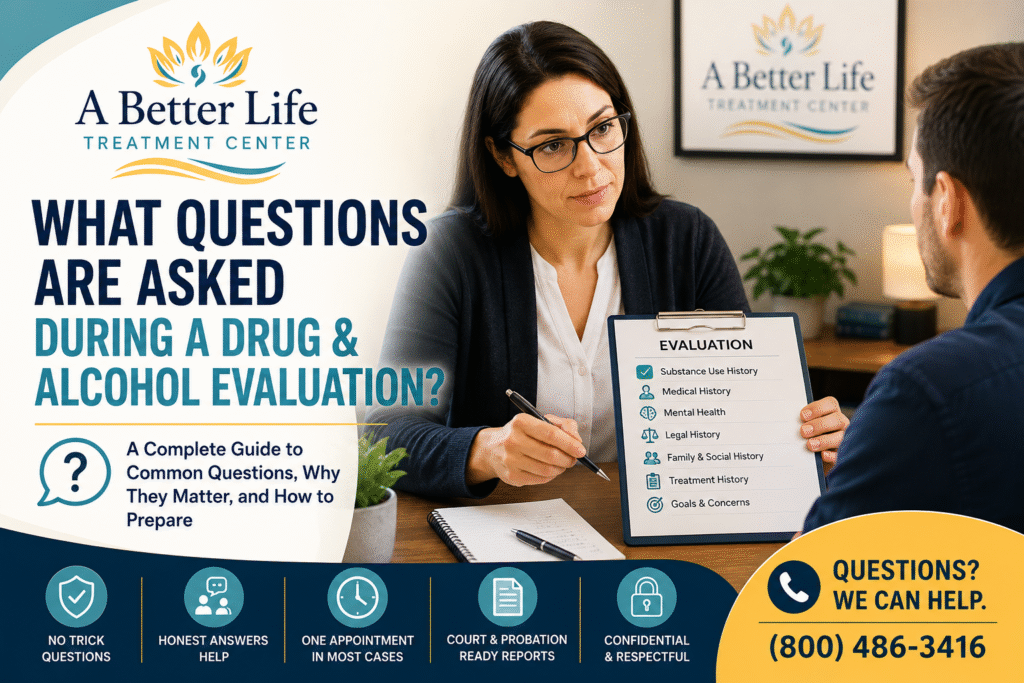
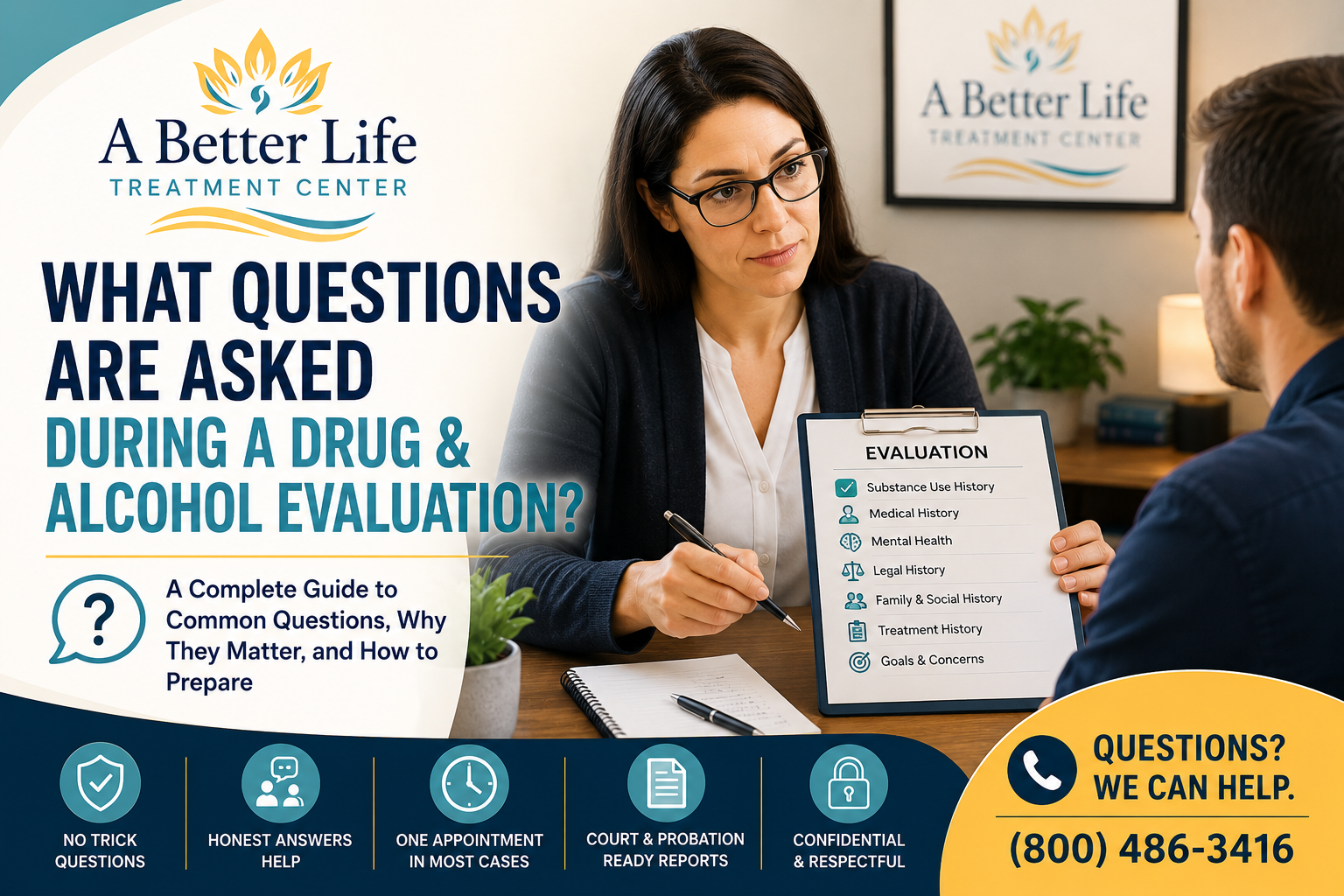
What Questions Are Asked During a Drug & Alcohol Evaluation?
If you have a drug and alcohol evaluation coming up, you may feel nervous. You may also wonder what the evaluator will ask.
The good news is that there are usually no trick questions. Instead, the evaluator wants to understand your history, current situation, and any concerns linked to alcohol or drug use.
This guide explains the most common questions, why they are asked, and how you can prepare.
Key Takeaways
- Most evaluations ask about alcohol use, drug use, health, and legal concerns.
- The evaluator may also ask about work, family, mental health, and past treatment.
- There are usually no trick questions.
- Honest answers help the evaluator make a fair recommendation.
- Bringing the right paperwork can help prevent delays.
What Questions Are Asked in a Drug and Alcohol Evaluation?
Typical questions may include:
- Why were you asked to complete the evaluation?
- How often do you drink alcohol?
- Have you used illegal drugs or misused medication?
- Has substance use affected work, school, or family life?
- Have you had alcohol- or drug-related legal problems?
- Have you received counseling or treatment before?
- Do you have any mental health concerns?
- Are you taking any medications?
The exact questions will depend on why you need the evaluation. For example, a DUI evaluation may focus more on driving history and alcohol use.
By contrast, a family court evaluation may include more questions about parenting, safety, and stability.
Questions About Alcohol and Drug Use
First, the evaluator will usually ask about your history with alcohol and drugs. These questions help identify patterns and possible risks.
For example, you may be asked:
- How old were you when you first used alcohol or drugs?
- How often do you currently drink or use substances?
- How much do you use at one time?
- Have you tried to cut back or stop?
- Have you ever felt unable to control your use?
- Have you had blackouts, withdrawal symptoms, or strong cravings?
- Have friends or family expressed concern?
- Has your use changed over time?
These questions do not automatically mean the evaluator believes you have an addiction. Instead, they help the evaluator understand whether substance use has caused problems.
Questions About Work, School, and Family
Next, the evaluator may ask how alcohol or drug use has affected your daily life. This may include work, school, relationships, and financial responsibilities.
Common questions may include:
- Has substance use caused problems at work?
- Have you missed work, school, or important duties?
- Has alcohol or drug use affected your relationships?
- Have you had arguments about your use?
- Do you have a stable place to live?
- Who supports you when you are under stress?
In addition, the evaluator may ask about your goals. This helps them understand what support may be useful.
Questions About Legal History
If the evaluation is connected to court, probation, or an attorney, legal questions are likely. Therefore, bring any paperwork you received.
You may be asked:
- What charge or event led to the evaluation?
- Have you had prior DUI, DWI, OUI, OVI, or drug charges?
- Are you currently on probation or pretrial supervision?
- Have you missed any court or probation requirements?
- Was alcohol or drug use involved in the current case?
- Does the court require a written report?
- Where should the report be sent?
Questions About Mental Health and Medical History
Alcohol and drug use can be linked to stress, anxiety, depression, trauma, or other health concerns. Because of that, the evaluator may ask about your mental and physical health.
Questions may include:
- Have you ever been diagnosed with a mental health condition?
- Do you have symptoms of anxiety or depression?
- Have you experienced trauma or major stress?
- Are you taking prescription medications?
- Have you ever been hospitalized for mental health or substance use concerns?
- Have you ever had thoughts of harming yourself or someone else?
These questions can feel personal. However, they help the evaluator understand the full picture.
Questions About Past Treatment
The evaluator may also ask about counseling, treatment, classes, or support groups. Prior help does not automatically count against you.
Instead, the evaluator may ask:
- Have you completed a prior evaluation?
- Have you attended alcohol or drug education classes?
- Have you received outpatient or inpatient treatment?
- Have you attended AA, NA, or another support group?
- Did past treatment help?
- Did you complete the recommendation?
If you have records, bring them. As a result, the evaluator may have a clearer view of your treatment history.
Why Honest Answers Matter
Many people worry that honest answers will lead to a worse result. However, inaccurate answers can make the evaluation less reliable.
For example, if you leave out prior treatment or legal problems, the evaluator may receive that information later. That may raise concerns about whether the rest of the information is accurate.
Therefore, answer as clearly as you can. You do not need to guess, exaggerate, or tell the evaluator what you think they want to hear.
You can learn more in our guide, Can You Fail a Drug and Alcohol Evaluation?
Will the Evaluator Ask the Same Questions More Than Once?
Sometimes, yes. You may answer similar questions during the interview and on a written screening form.
This does not always mean the evaluator is trying to catch you in a mistake. Instead, standard screening tools often repeat or rephrase certain topics.
As a result, the evaluator can compare answers and better understand your situation.
How Long Does the Question-and-Answer Process Take?
Many evaluations can be completed in one appointment. However, the exact length depends on your history, paperwork, and reporting needs.
Some appointments may take about 45 to 90 minutes. Still, more complex cases may take longer.
For more details, read How Long Does a Drug and Alcohol Evaluation Take?
How to Prepare for the Questions
You do not need to memorize answers. Still, preparing a few details can make the appointment easier.
Before the evaluation:
- Review why the evaluation was requested.
- Gather court, probation, attorney, or employer paperwork.
- Write down your current medications.
- Gather prior treatment records, if available.
- Know your court date or deadline.
- Confirm where the report should be sent.
- Log in early if the appointment is virtual.
Most importantly, try to stay calm. The evaluator is there to gather information and explain the next steps.
What Happens After the Questions Are Complete?
After the interview, the evaluator reviews the information. They may also review paperwork, screening results, and prior records.
Next, they may make a recommendation. Possible outcomes may include:
- No further services
- Alcohol or drug education
- Outpatient counseling
- Intensive outpatient treatment
- Mental health services
- Follow-up monitoring or testing, when required
If a written report is needed, ask when it may be ready and where it will be sent.
FAQ: Questions Asked During an Evaluation
What questions are asked during a drug and alcohol evaluation?
Evaluators often ask about alcohol use, drug use, legal history, mental health, medical history, family life, work, prior treatment, and the reason for the evaluation.
Are there trick questions during the evaluation?
Usually, no. The questions are designed to understand your history and current needs. However, some screening tools may ask similar questions in different ways.
Should I admit that I drink or use drugs?
You should answer honestly. Accurate information helps the evaluator make a fair recommendation. Leaving out important details may make the assessment less reliable.
Will the evaluator ask about my arrest?
If the evaluation is related to court, probation, or a DUI charge, the evaluator will likely ask about the event and any prior legal history.
Will the evaluator ask about mental health?
Yes, they may ask about anxiety, depression, trauma, medications, and prior mental health treatment. These questions help the evaluator understand the full situation.
Do I need to bring court paperwork?
Yes, if available. Court orders, probation instructions, attorney letters, or employer documents can help confirm what type of evaluation and report are required.
Can I complete the evaluation online?
Virtual evaluations may be available in many situations. However, you should confirm that the court, probation office, attorney, employer, or agency will accept an online evaluation.
Will treatment always be recommended?
No. Recommendations depend on the information gathered during the evaluation. Some people may receive education, counseling, treatment, or no further recommendation.
Can the evaluator send a report to my attorney or court?
A report may be sent when required and when the proper authorization and delivery information are provided. Ask about report procedures before or during your appointment.
Schedule a Confidential Evaluation
If you need a drug and alcohol evaluation, A Better Life Treatment can help you understand the process. Our team can explain what paperwork to bring and what to expect during the appointment.
We provide professional evaluations for court, probation, attorneys, employers, licensing matters, family concerns, and personal needs.