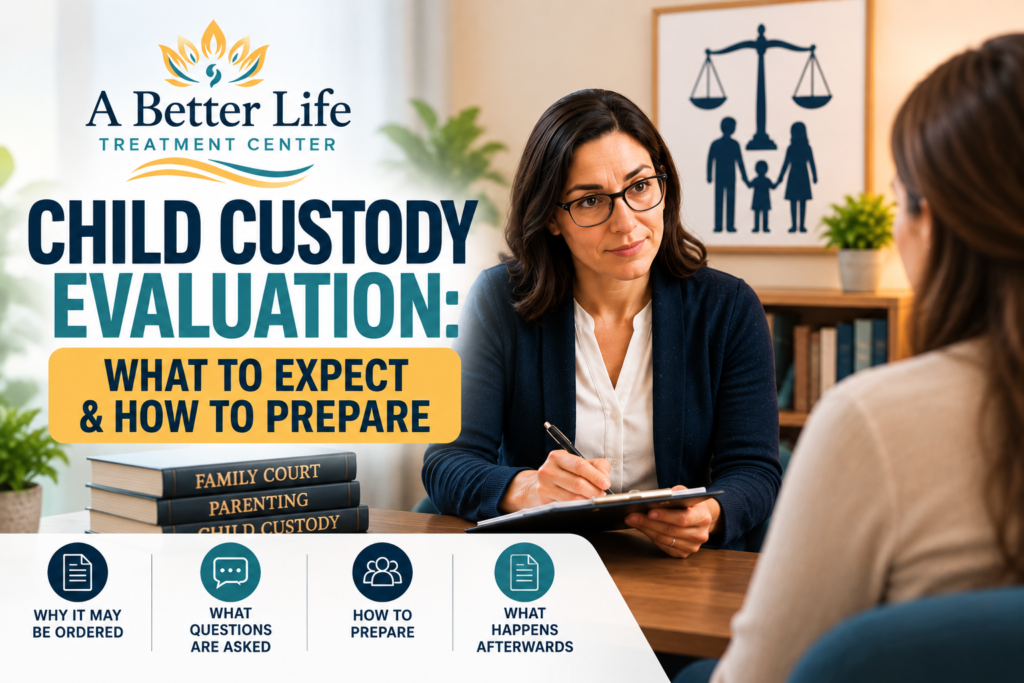
When a child custody or family court case involves questions about a parent’s mental health, behavior, substance use, or family circumstances, an evaluation may become part of the process. If you’ve been asked to complete one, you may be wondering what the evaluator will ask, what information matters, and how you should prepare.
The exact type of evaluation can vary depending on the court order, attorney request, and circumstances of the case. Some parents may be referred for a mental health, substance use, domestic violence, or other behavioral health evaluation related to a custody matter.
This guide explains what to expect when an evaluation is requested in connection with a child custody case, what questions may be asked, how to prepare, and what may happen afterward.
What Is a Child Custody Evaluation?
The term child custody evaluation can describe different types of assessments used during a custody or family court case. A formal forensic custody evaluation may examine parenting, family relationships, the needs of the child, and other factors to help the court make custody-related decisions.
In other situations, the court or an attorney may request a specific behavioral health evaluation of a parent. For example, a parent may be asked to complete a court-ordered mental health evaluation, substance use evaluation, domestic violence evaluation, or another assessment relevant to the case.
Because these evaluations are not all the same, it is important to review your court order or referral paperwork before scheduling. This helps determine exactly what type of evaluation is being requested.
Why Might an Evaluation Be Requested in a Child Custody Case?
Family courts deal with many different circumstances. An evaluation may be requested when additional professional information could help address a concern that has been raised during the case.
For example, questions may involve a parent’s emotional well-being, behavioral health, alcohol or drug use, family conflict, anger, previous treatment, or another issue relevant to the proceedings.
An evaluation may be requested by the court, an attorney, or another authorized party. However, the reason for the evaluation and the information being requested can differ significantly from one case to another.
What Happens During an Evaluation for a Child Custody Case?
Your appointment generally begins with a review of why you were referred. The evaluator may ask to see your court order, attorney letter, or other documentation so the purpose of the evaluation is clear.
From there, you may discuss your personal history, family circumstances, relationships, mental health, behavioral concerns, treatment history, and any issues specifically identified in the referral.
The evaluator may also use standardized screening tools when appropriate. The exact process depends on the type of evaluation you have been asked to complete.
What Questions May Be Asked?
There is no single list of questions used in every evaluation. The questions should relate to the purpose of the assessment and the concerns identified in the referral.
You may be asked about your family and relationship history, current living situation, mental health history, previous counseling or treatment, medications, alcohol or drug use, major sources of stress, and any legal issues relevant to the referral.
You may also be asked about conflict within the family, how you respond to stressful situations, and the circumstances that resulted in the evaluation being requested.
Will the Evaluator Talk to My Child?
Not necessarily. This depends heavily on the type of evaluation being performed.
A comprehensive forensic custody evaluation may involve children, parents, records, interviews, and other sources of information. A behavioral health evaluation requested for one parent may have a much narrower purpose and may not involve interviewing the child at all.
Do not assume that a child interview is required. Review your referral paperwork and ask the provider what the requested evaluation includes before the appointment.
What Is the Evaluator Looking For?
The answer depends on why you were referred. A mental health evaluation, for example, may focus on emotional health, symptoms, treatment history, functioning, and possible treatment needs.
A drug and alcohol evaluation may focus more specifically on substance use patterns, consequences, previous treatment, and whether additional services may be appropriate.
A domestic violence evaluation may address relationship history, patterns of conflict or behavior, safety concerns, and other factors relevant to that assessment.
The evaluator’s role is to gather relevant information and make professional findings or recommendations within the scope of the requested assessment.
Should I Talk About Problems With the Other Parent?
If relationship or family conflict is relevant to the evaluation, you may be asked about it. Answer questions honestly and provide the information requested, but try to focus on facts rather than using the evaluation as an opportunity to attack the other parent.
If there are serious concerns involving safety, violence, substance use, or another issue relevant to the assessment, explain those concerns accurately when asked.
The evaluator may ask follow-up questions to better understand the circumstances and how they relate to the reason for your referral.
Can You Fail an Evaluation for Child Custody?
Behavioral health evaluations are generally not traditional pass-or-fail tests. The purpose is to assess the areas identified in the referral and determine whether there are findings or recommendations relevant to those concerns.
Depending on the type of evaluation and your individual circumstances, the evaluator may recommend no additional clinical services or may recommend counseling, treatment, education, additional assessment, or another appropriate service.
The evaluator’s recommendation and the court’s decision are also not the same thing. The court determines what weight to give evaluation results along with other information in the case.
How to Prepare for a Child Custody-Related Evaluation
One of the most important things you can do is determine exactly what type of evaluation has been requested before your appointment.
Have your court order, attorney letter, referral form, or other paperwork available. You should also know your court date or deadline and who is supposed to receive the completed documentation.
If requested, gather relevant treatment records, medication information, previous evaluation records, or other documents related to the assessment. Do not overwhelm the evaluator with unrelated records unless they have been requested or are directly relevant.
Most importantly, answer questions honestly. Trying to provide what you believe is the “perfect” answer can make it harder for the evaluator to understand your actual circumstances.
Is a Child Custody-Related Evaluation Confidential?
An evaluation connected to a court case may have different confidentiality limits than ordinary private counseling.
If the court, attorney, or another authorized party requested the assessment, a report or other documentation may need to be provided to that party. The exact information released depends on the type of evaluation, referral, authorization, and applicable requirements.
Before the evaluation begins, ask who will receive the results, what type of documentation will be prepared, and how that information may be used.
Can the Evaluation Be Completed Online?
Some behavioral health evaluations may be available through secure virtual appointments. This can make completing an evaluation easier for parents balancing work, childcare, transportation, and court deadlines.
However, not every type of custody-related assessment can or should be completed virtually. Acceptance can also vary by court, jurisdiction, attorney, and the specific evaluation requested.
Before scheduling an online evaluation, confirm that a virtual assessment meets the requirements of the person or organization requesting it.
What Happens After the Evaluation?
After the appointment, the evaluator reviews the information collected and determines whether findings, recommendations, or documentation are required.
Depending on the evaluation, recommendations may include no additional services, individual counseling, family counseling, mental health treatment, substance use services, anger management, additional assessment, or another appropriate level of care.
If documentation is required for court or an attorney, confirm who is responsible for submitting it and when it is due. Do not assume that paperwork will automatically be sent without confirming the instructions.
Mental Health Evaluations and Child Custody Cases
Mental health concerns sometimes become part of a custody or family court case. When that happens, a parent may be asked to complete an evaluation to provide more information about emotional health, symptoms, treatment history, functioning, or possible treatment needs.
A mental health evaluation does not automatically mean that someone has a mental health condition or is unable to parent. It is an assessment designed to provide professional information about the specific issues being evaluated.
For a more detailed explanation of that process, read our guide to court-ordered mental health evaluations.
Frequently Asked Questions About Child Custody Evaluations
What is a child custody evaluation?
The term can refer to different assessments used in family court. A formal custody evaluation may examine parenting and family relationships, while some cases involve a more specific mental health, substance use, domestic violence, or behavioral health evaluation of a parent.
Can you fail a child custody evaluation?
Behavioral health evaluations are generally not pass-or-fail tests. The evaluator gathers information and may develop findings or recommendations related to the reason for the assessment.
What questions are asked during a child custody evaluation?
Questions depend on the type of evaluation. They may address family history, relationships, mental health, treatment, substance use, behavior, stress, conflict, and the circumstances that led to the referral.
Will the evaluator interview my child?
Not necessarily. A comprehensive forensic custody evaluation may involve a child, while a specific behavioral health evaluation of a parent may not. Confirm the scope of your evaluation before the appointment.
Should I bring my court paperwork?
Yes. Your court order, attorney letter, referral form, or other documentation can help the provider determine exactly what type of evaluation has been requested and what documentation may be required afterward.
Can a custody-related evaluation be completed virtually?
Some behavioral health evaluations may be completed virtually. However, requirements vary, so confirm that an online evaluation is acceptable for your specific court or referral before scheduling.
Does the evaluator decide who gets custody?
A behavioral health evaluator does not simply decide which parent receives custody. The evaluator provides information or recommendations within the scope of the assessment. Custody decisions are ultimately made through the applicable legal process.
Need an Evaluation for a Child Custody or Family Court Case?
If you’ve been asked to complete an evaluation related to a child custody, divorce, or family court matter, the first step is determining exactly what type of assessment has been requested.
A Better Life Treatment provides professional behavioral health evaluations and related services. Have your court order, attorney letter, or referral paperwork available when you contact us so our team can review what you need.
Ready to get started? Call (800) 486-3416 or contact A Better Life Treatment to discuss your evaluation and next steps.