Domestic Violence Evaluation: What to Expect
If a judge, probation officer, attorney, or family court has required you to complete a domestic violence evaluation, you may be wondering what the appointment involves. Many people assume the evaluation is designed to determine guilt. It is not.
Instead, the evaluation helps a licensed professional assess relationship dynamics, behavioral patterns, safety concerns, and whether education, counseling, or other services may be appropriate.
Key Takeaways
- A domestic violence evaluation is not a pass-or-fail test.
- It helps courts understand relationship and behavioral concerns.
- Bring court, probation, or attorney paperwork to your appointment.
- Many evaluations can be completed in one confidential session.
- Recommendations vary based on each individual’s circumstances.
What Is a Domestic Violence Evaluation?
A domestic violence evaluation is a professional behavioral assessment used in criminal, family, and civil court matters. It helps identify relationship patterns, conflict, safety concerns, and whether intervention services may be beneficial.
The evaluation does not determine guilt or innocence. Instead, it provides objective clinical information that may help the referring party make informed decisions.
Who May Need a Domestic Violence Evaluation?
Domestic violence evaluations are commonly requested in legal matters involving interpersonal conflict. Depending on your case, the evaluation may be ordered by a judge, requested by an attorney, or recommended during family court proceedings.
Common situations include:
- Domestic battery or assault charges
- Protective order or restraining order cases
- Probation requirements
- Child custody disputes
- Divorce or family court litigation
- Pretrial diversion programs
- Attorney-requested behavioral assessments
What Happens During the Evaluation?
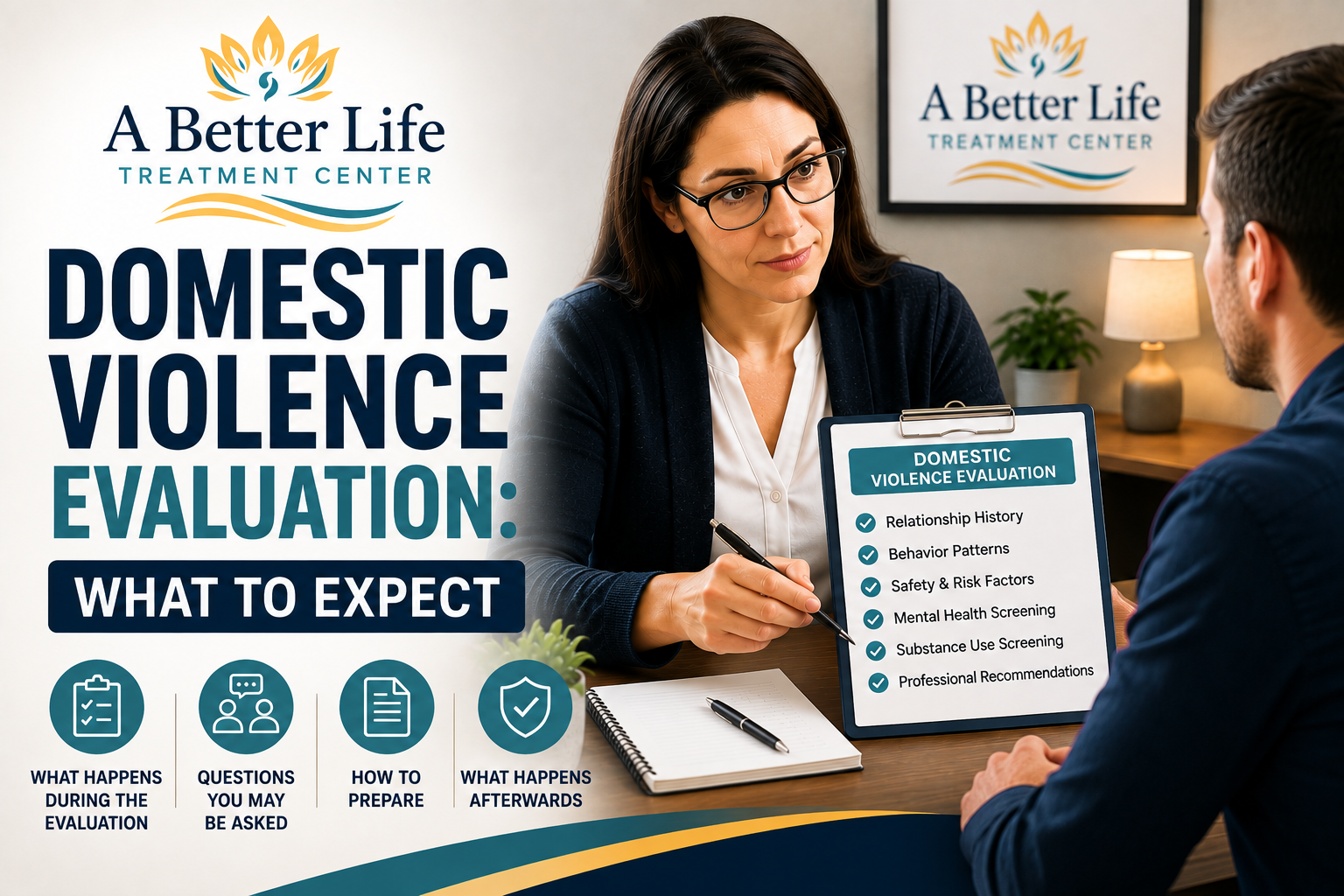
Most appointments begin with a confidential interview. The evaluator reviews your background, the reason for the referral, and any available legal documents.
The evaluation may include:
- Review of court or probation paperwork
- Relationship and family history
- Conflict resolution patterns
- Behavioral and emotional regulation
- Mental health screening
- Substance use screening, when relevant
- Professional clinical recommendations
The goal is to understand the circumstances—not simply the incident itself.
What Questions Will the Evaluator Ask?
Every evaluation is different. However, many appointments explore similar topics to better understand relationship dynamics and personal history.
You may be asked:
- Why were you referred for the evaluation?
- What happened during the incident?
- How do you typically handle conflict?
- Have there been previous domestic disputes?
- Do you have children involved in the case?
- Have you attended counseling before?
- Do alcohol or drugs play a role in the conflict?
- What support systems do you have?
Honest answers help the evaluator create the most accurate assessment.
Is the Evaluation Confidential?
The interview is generally confidential. However, when the evaluation is completed for court, probation, or another legal matter, the resulting report may be shared with the referring party as authorized.
Before your appointment, ask who will receive the completed evaluation and whether additional releases are required.
How to Prepare for Your Evaluation
Preparation helps the appointment run smoothly and reduces unnecessary delays.
Bring or send:
- Court orders or legal paperwork
- Probation instructions
- Attorney correspondence
- Any previous evaluations or counseling records
- A list of current medications
- Your upcoming court date or deadline
Most importantly, arrive prepared to discuss the situation honestly and respectfully.
What Happens After the Evaluation?
After the interview, the evaluator reviews all information and prepares recommendations when required. Depending on your case, possible outcomes may include:
- No additional services
- Anger management education
- Family violence intervention programming
- Individual counseling
- Substance abuse treatment, when appropriate
- Mental health services
Recommendations are individualized. They are based on the evaluation—not automatically assigned because of the charge alone.
FAQ: Domestic Violence Evaluations
What is a domestic violence evaluation?
It is a professional behavioral assessment used in criminal, family, and civil court matters to evaluate relationship dynamics, conflict, safety concerns, and possible service recommendations.
Is a domestic violence evaluation the same as counseling?
No. An evaluation is an assessment. Counseling or treatment may or may not be recommended afterward.
How long does a domestic violence evaluation take?
Many evaluations can be completed in one appointment, although complex legal cases may require additional review.
Will the evaluator determine whether I am guilty?
No. The evaluator provides a clinical assessment, not a legal determination of guilt or innocence.
What should I bring to my appointment?
Bring court paperwork, probation instructions, attorney documents, medication information, and any relevant counseling or treatment records.
Schedule a Confidential Domestic Violence Evaluation
If you need a domestic violence evaluation for court, probation, family court, or an attorney, A Better Life Treatment provides confidential, professional evaluations designed to meet legal requirements.